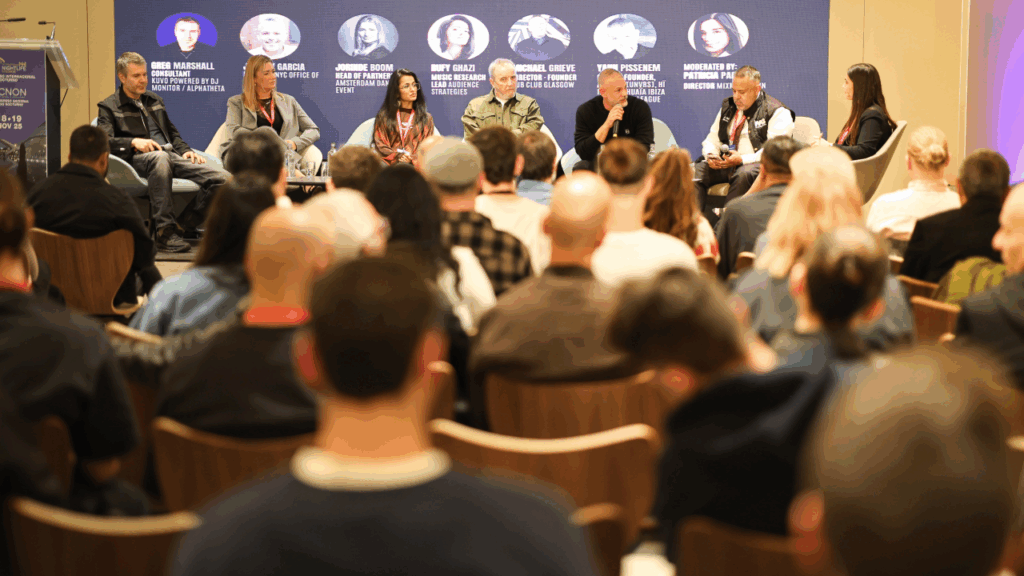
Standing in Valencia at the 10th Anniversary International Nightlife Congress, I was struck by how far this community has come. Not just in size or influence, but in confidence. Confidence in who we are, what we contribute, and why our industry matters far beyond the walls of any single venue, city, or country.
When I look back to being a 19-year-old dancing in a London warehouse at sunrise, fuelled by nothing more than music, connection, and a dream that the night might never end, I never imagined I would one day be standing shoulder to shoulder with global leaders of nightlife, discussing policy, education, sustainability, and international cooperation. Yet here we are, and it feels more important now than ever.
Valencia reminded me, more than anything, that nightlife is not an isolated sector. It is a global ecosystem. Our challenges, whether safety, licensing, workforce development, sustainability, or the protection of cultural spaces—are rarely unique to one city or nation. That is why international collaboration is no longer a luxury; it is a necessity.
Nightlife is often misunderstood. Too often, it is reduced to a conversation about alcohol, noise, or disorder. But those of us who live and breathe this world know the truth. We do not just sell tickets, drinks, or experiences. We create time and space for human connection. We host moments that become part of people’s identities. We support mental wellbeing, social cohesion, and cultural expression. The economic value is measurable, but the social value is immeasurable.
However, our influence remains limited when we advocate in isolation. A single city pushing for policy change can be easily overlooked. A single organisation calling for reform can be quietly side-lined. But when we work together, across borders, across disciplines, across cultures, our voices carry. Coordinated global advocacy is how local influence becomes global impact. When we stand together, the world listens.
At the Congress, the most powerful conversations did not just focus on where we are struggling, but on how we can learn from each other. Education sits at the heart of that. Not just education for the next generation of promoters, managers, and creative leaders, but education within government, policing, urban planning, and public health. By sharing our research, frameworks, pilot projects, and lived experience, we can turn best practice into shared practice, and shared practice into meaningful change.
Cross-border collaboration allows us to strengthen standards around safety, inclusion, and sustainability. It allows us to develop consistent messaging when engaging with policymakers. It allows us to advocate collectively for fair working conditions, professional recognition, and long-term opportunities for the people who power our industry. From promoters and DJs to security staff, technicians, hospitality workers, and transport teams, this is a workforce that deserves respect, stability, and a future.
One of the most striking realities discussed in Valencia is the role nightlife plays in shaping cities. It drives where young people choose to study, where creative talent chooses to move, and where global companies decide to base their operations. A strong night-time economy is a magnet for ambition. It fuels the creative industries, supports tourism, strengthens hospitality, and enhances urban identity. Nightlife is not an optional extra; it is part of a city’s emotional, social, and economic infrastructure.
The last few years have taught us hard lessons about vulnerability, resilience, and the power of unity. From pandemics to cost-of-living crises, from licensing pressures to cultural displacement, we have faced challenges that could have fractured us. Instead, they have brought us closer. By sharing knowledge, aligning our strategies, and working in partnership with governments and institutions, we are not just surviving, we are shaping the future.
It was also deeply inspiring to see the next generation stepping forward with confidence, creativity, and purpose. They are not simply inheriting this culture; they are reinventing it—more inclusive, more expressive, more fearless. Our responsibility is to support them, educate them, and ensure the pathways into this industry remain open and protected.
Valencia did more than host a congress. It created a space for reflection, collaboration, and collective ambition. My thanks go to the organisers, the speakers, the city, and the countless individuals behind the scenes who made it possible. But more than that, my thanks go to every person across the world who continues to believe in the power of the night.
Nightlife is not background noise. It is a cultural and economic engine. When we stand together, when we share knowledge across borders, when we invest in education, and when we strengthen our relationships with policymakers, we ensure that this engine continues to power our cities, our communities, and our future.
Local influence becomes global impact when we act collectively. Let us keep the conversation going. Let us build stronger bridges between countries, sectors, and communities. Let us make sure that the night continues to be a place where culture, connection, and creativity not only survive, but thrive. Because when nightlife stands together, the world will listen.