Written by: Michael Kill, NTIA, CEO
Full Nightlife Article Newsletter series.
Have you ever been asked to leave a club or a bar before, or been refused entry at the door? Perhaps it felt unjust, a bruising to your night out or even your pride. You might have shrugged it off as an arbitrary decision made by someone who simply didn’t like the look of you. But what if that moment of refusal was the result of a finely honed skill, developed over decades on the front doors of venues across the UK?
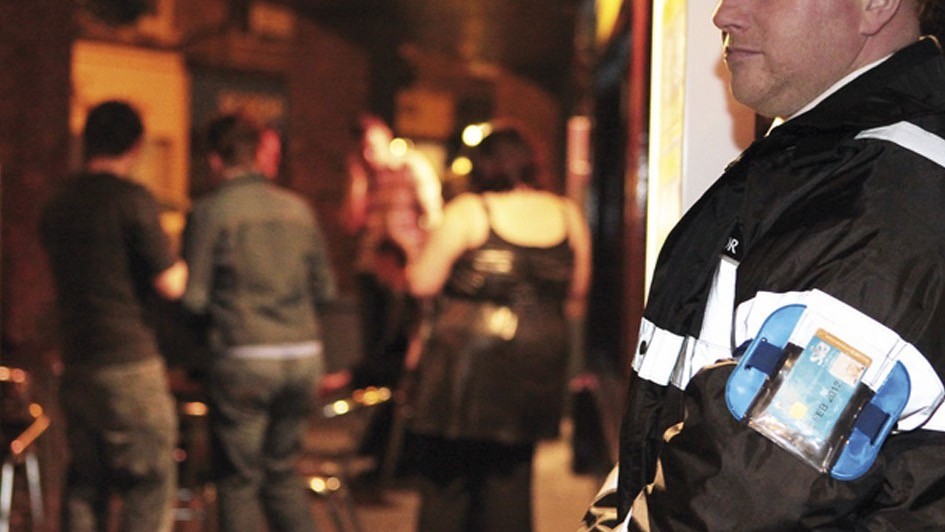
Door supervisors, as they are formally known, are often the unsung heroes of nightlife. Much of their work remains in the shadows, their skillsets rarely acknowledged beyond the surface-level assumption that they are there to check IDs and deal with trouble. But beneath the steely stares and clipped phrases lies a remarkable talent: the ability to read human behaviour with near surgical precision. The truth is, these gatekeepers have been quietly mastering the art of behavioural analysis, making split-second decisions that balance safety, fairness, and the smooth running of a venue.
Imagine this: a door supervisor has just 45 seconds, perhaps less, to decide whether someone should be allowed into a club. In that brief exchange, they assess markers of drunkenness, attitude, age, and dress code compliance. But the skill doesn’t stop at evaluating the individual directly in front of them. Their peripheral awareness sweeps the queue, picking up on interactions between friends, identifying tensions or overly boisterous behaviour, and even catching subtle signs of conflict further down the line. It’s a level of vigilance that requires focus and intuition, and it’s all carried out in real-time, night after night.
One of the key tools in a door supervisor’s arsenal is their ability to decode body language. This isn’t just about spotting someone who sways slightly or slurs their words; it’s about interpreting microexpressions, posture, and movements that betray confidence, aggression, nervousness, or deceit. An individual may insist they’re sober, but a fleeting glance at their unsteady gait or the way they fumble with their belongings can tell a door supervisor otherwise. Likewise, a friendly smile can’t always mask the undercurrent of hostility in a tense jaw or clenched fist. These are details most people wouldn’t even notice, but for a seasoned door supervisor, they are second nature.
This expertise doesn’t emerge overnight. Many door supervisors develop their observational skills over years, gradually fine-tuning their ability to interpret human behaviour. They learn to spot patterns, recognise recurring situations, and adapt their responses to prevent problems before they start. While some of this knowledge comes from formal training, much of it is absorbed through experience, intuition, and the high-stakes nature of their work. A poorly judged decision at the door can mean allowing someone in who later instigates a fight or compromises the safety of other patrons.
Yet, despite the depth of their skills, door supervisors often receive little recognition for this aspect of their role. Society tends to undervalue their contributions to public safety and security, instead pigeonholing them as enforcers rather than analysts. It’s a mischaracterisation that diminishes the respect they deserve and overlooks the potential to apply their expertise in broader contexts. The security sector, for instance, could benefit enormously from the behavioural analysis skills cultivated by door supervisors. From crowd management to conflict de-escalation, their abilities are transferable and indispensable.
What’s more, the ability to read people effectively is a skill that transcends the security profession. In an age where artificial intelligence and algorithms are often heralded as the future of decision-making, it’s worth pausing to appreciate the nuanced, human art of behavioural analysis practiced by door supervisors. Their work reminds us that some skills, particularly those rooted in human interaction, cannot be easily replicated or replaced.
So, the next time you encounter a door supervisor at the door, take a moment to consider the expertise they wield. They are not just gatekeepers of nightlife; they are unheralded masters of body language and behaviour, ensuring that our nights out remain as safe and enjoyable as possible. While their decisions may sometimes feel personal, they are often the result of an intricate, split-second process—one that reflects decades of collective experience across the UK. Let’s give credit where it’s due and acknowledge the vital, understated role they play in the security sector and beyond.