Written by: Michael Kill, NTIA, CEO
Full Nightlife Article Newsletter series.
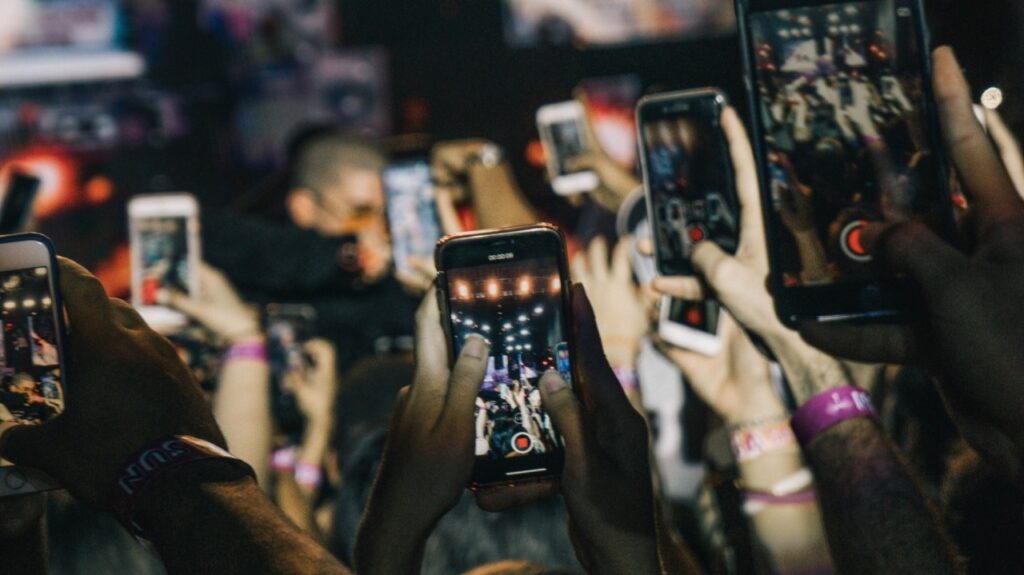
In the heart of the world’s nightlife, a rising debate is simmering over whether mobile phones belong on the dance floor. For many, capturing the night on a phone is second nature—a way to share experiences with friends and preserve memories. But for others, these glowing screens feel intrusive, pulling attention away from the music and atmosphere. Are we robbing ourselves of the full, immersive experience of nightlife by having our screens always at hand? Or do phones add a new layer, enabling us to celebrate and relive moments we’d otherwise lose?
This debate is multi-layered, with insights from past and present ravers, venue owners, and even DJs shaping the discussion. Let’s explore the arguments and consider how the industry can innovate to balance immersion and memory-making.
For ravers who came up before the smartphone era, a night out was purely about the music, the people, and the atmosphere. There were no distractions from glowing screens or the urge to document every second. Instead, they were fully present, immersed in every beat, free to dance without the sense of being observed or recorded. They could express themselves without reservation, knowing that nothing would be shared or scrutinised later.
The presence of phones on the dance floor, argue many from this generation, detracts from that collective energy. Every raised screen feels like a break in the flow—a small reminder that even in these spaces meant for pure freedom and connection, the outside world is watching. Some argue that people may dance or act differently in the presence of phones, inhibiting the kind of spontaneous, uninhibited energy that’s central to a memorable night. In their view, banning phones brings everyone back to the here and now, letting the crowd become part of something fleeting and shared.
On the flip side, many clubgoers today see phones as essential tools for documenting their lives. Social media has become a vital platform for celebrating and sharing nightlife culture. For DJs, clubs, and attendees alike, social media posts are a way to connect, promote, and relive the moments that bring people together. A video of a favourite DJ’s set or a well-captured moment of the crowd erupting into dance is, for many, a treasured keepsake.
Phones can also help new communities of nightlife fans find each other online, fostering excitement, and generating buzz. Especially in a time when nightlife faces challenges from rising costs and societal pressures, sharing experiences can be essential to keeping the culture alive and growing.
Is there a way to strike a middle ground between preserving the immersive experience and allowing people to record their memories? Some clubs are experimenting with creative approaches to find this balance.
One emerging approach is the concept of “phone zones”—designated spaces away from the main dance floor where people can capture their experiences. This way, the core dance floor remains free of distractions, but guests still have a chance to capture memories and share their experience.
Venues are also exploring ways to use light, sound, and scent to create immersive environments that invite full attention. By heightening the sensory experience, people may feel more inclined to pocket their phones and embrace the moment.
Ultimately, the debate over phones on dance floors is as much about cultural expectations as it is about technology. If venues can create environments that actively encourage presence and connection, clubgoers may naturally shift away from the impulse to record every moment. By integrating these spaces with an ambiance that captivates and holds attention, the industry can promote the immersive experience without explicitly banning phones.
Furthermore, venues can foster this cultural shift by setting expectations. Instead of banning phones outright, a request for people to “be present” can set the tone, helping to cultivate a communal atmosphere. Signs, staff announcements, or even pre-event messaging can encourage attendees to respect the vibe and consider the impact of their devices on themselves and those around them.
In the end, the phone debate is a sign of the times, as technology reshapes how we experience and remember our nights out. The challenge is to preserve the magic of these moments while adapting to the evolving needs of clubgoers. By experimenting with creative solutions, the industry can keep the dancefloor sacred, while allowing people to remember and celebrate the night.
For now, there’s no perfect answer—but perhaps the journey toward finding one will lead us to deeper, more innovative experiences than we’ve yet imagined. As we explore new ways to enhance the atmosphere, it’s exciting to imagine what the next era of nightlife might hold: a blend of tradition and innovation that keeps us dancing into the future.