Written by: Michael Kill, NTIA, CEO
Full Nightlife Article Newsletter series.
In the fast-paced digital age, where innovation has been the key to progress, we’ve witnessed a revolution unlike any before. The smartphone, social media, and various technological marvels have become indispensable tools that shape how we work, entertain, and most importantly—how we communicate. While the positive aspects of these advancements cannot be understated, I feel compelled to address a growing concern within our community, particularly among the younger generation.
Is it possible that in embracing these tools, we have inadvertently created a generation that struggles with face-to-face communication? Has the ever-expanding presence of technology in our lives led to social disengagement and a deeper, more concerning shift in our collective ability to connect?
For those of us in the night-time industries, communication is central to everything we do. The energy of a buzzing club, the intimate conversations in a bar, or the shared experience of live performances—these moments are about connection. But increasingly, I see a generation that seems uncomfortable in these environments, where eye contact is fleeting, and the ability to engage in meaningful conversation feels like a lost art.
Social media, with all its promises of connection, has instead fostered a kind of shallow engagement. Conversations happen in likes, shares, and emojis, while face-to-face dialogue—complete with nuance, tone, and emotion—takes a back seat. Many young people today seem more at ease curating their online personas than they are in expressing themselves authentically in person.
Platforms like Instagram, TikTok, and X (formerly Twitter) have given us the ability to stay connected with hundreds, even thousands, of people at once. But are these connections real? Can we substitute deep, meaningful relationships with the constant scrolling of curated images and 280-character snippets?
We see a version of people online that’s polished, filtered, and often far from reality. This curated presentation of life not only skews our perceptions of others but also affects our expectations of ourselves. The pressure to be “perfect” online can, in turn, create anxiety and social withdrawal in the real world, where authenticity is far more valuable.
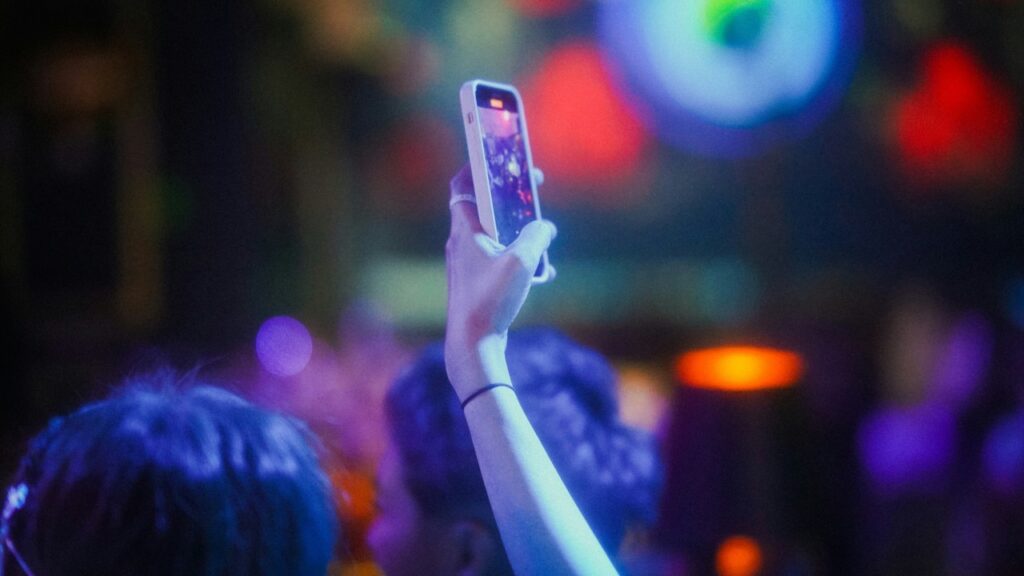
As someone who is part of an industry built on human interaction, I worry about this disengagement. The venues and spaces we operate in are designed to foster human connection—yet we are increasingly faced with an audience that seems to prefer a glowing screen to the vibrant, living energy around them.
Studies have begun to reflect what many of us already feel: the pervasive use of technology, particularly social media, has contributed to a rise in social anxiety, depression, and feelings of isolation among young people. A 2021 study by researchers at the University of Bath found that heavy social media use is linked to higher levels of anxiety and loneliness. Another study from the American Psychological Association highlighted how these digital habits are fundamentally changing the way young people develop social skills.
Where does this leave us? I’ve noticed that in many of our venues, young adults seem increasingly hesitant to approach strangers, make new friends, or even hold a sustained conversation. They are distracted, disengaged, and reluctant to be fully present in the moment. Instead of building relationships through shared experiences in the physical world, the younger generation is more accustomed to interacting through apps and avatars.
This is not to say that technology is the enemy. It has connected us in extraordinary ways, helped us navigate the pandemic, and created platforms for voices that might otherwise remain unheard. But in this balance between the virtual and the real, I fear we are losing sight of the importance of face-to-face interaction—the kind that builds empathy, fosters collaboration, and drives creativity.
As we move forward, we must ask ourselves: how can we encourage the next generation to re-engage socially in our real-world spaces? How can we create environments that foster genuine, human connection, and remind people of the irreplaceable value of in-person communication?
At the Night Time Industries Association, we believe in the power of human connection. Our venues, our events, our businesses—they all serve one purpose: to bring people together. But this mission becomes more challenging when our audience is increasingly disengaged, preferring virtual experiences to real-life interactions.
We must find ways to bridge this gap. Perhaps it’s through creating digital-free zones in our venues, or hosting events that emphasise conversation and interaction. Maybe it’s about educating young people on the importance of balance—enjoying the benefits of technology without sacrificing the essential skills that make us truly human.
It’s time to start a conversation—face to face—about the way forward. If we can foster a culture where technology enhances, rather than diminishes, our ability to connect, we will be able to preserve what makes our industry, and indeed our society, so special: the magic of human interaction.