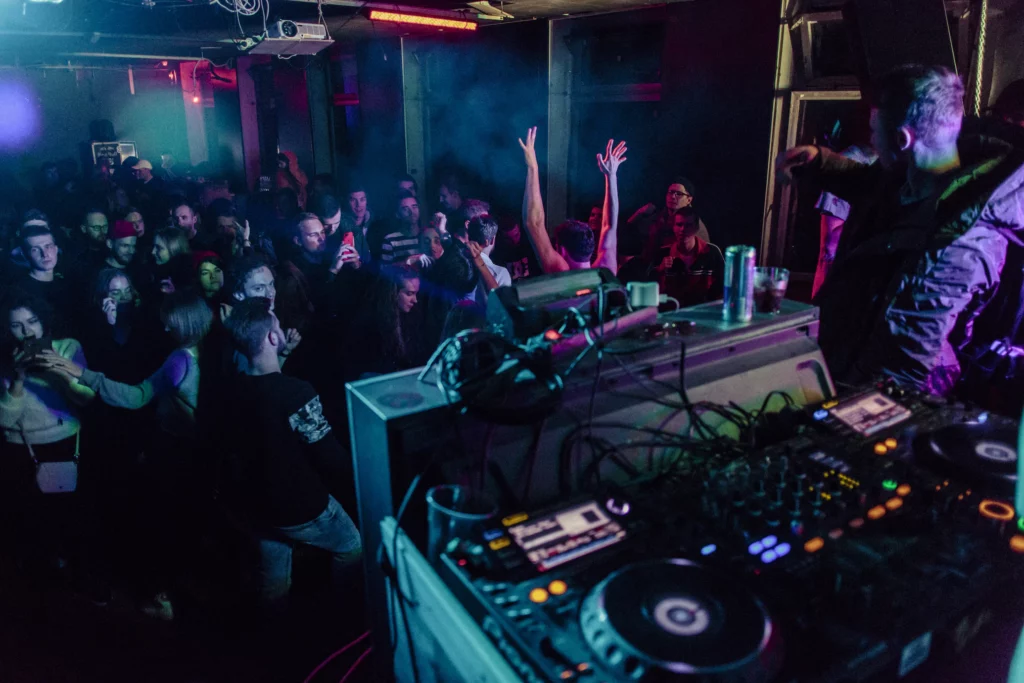
- Night Time Industries Association (NTIA) brings industry leaders to meet with Parliament’s Culture Committee to inform their understanding of electronic music’s worth and concerns, to pressure Government.
- Select Committee Chair Dame Caroline Dinenage MP: “Electronic music and club culture are integral parts of our national identity, creative economy and social fabric. Government must recognise and support this vital contemporary culture before we lose it. To do so would represent a huge cost to society’ .
- 15,000 capacity venue Drumsheds, previously an IKEA in North London, is host venue, showcasing the talent pipeline for electronic music culture.
The NTIA has worked with Parliament’s Committee on cultural policy, the Culture, Media and Sport Select Committee, on a set of roundtable discussions with electronic music industry leaders to drive action on a much neglected sector.
The sessions, held in London’s 15,000 capacity venue Drumsheds, will significantly raise the profile and understanding of electronic music in Parliament, primarily by informing the Committee’s priorities and ability to press Government on the culture’s value, and clear need for support.
The Committee is made up of cross-party MPs who formally hold the Government to account in Parliament. They will hear directly and honestly from core industry figures in light of continued unsustainable club closure rates and other pressing issues, among its opportunities.
Attendees include prolific DJs and producers such as Haai and SG Lewis, agents and managers of artists including Charli XCX and David Guetta, and a range of key figures from the sector reflecting the inclusivity core – and often unique – to electronic music culture.
These include performers, labels, radio, light and sound, clubs (from grassroots to larger), promoters, ticketing, festivals, agents, security, and local government.
On average, 3 nightclubs have closed per week in the UK, with a staggering 34% overall loss since November 2019. Now, new post-April tax rises from the Chancellor’s Autumn Budget threaten many more – with recent NTIA polls suggesting:
- 92% of nightlife businesses have already cut staff, operating hours, or essential investments, while
- 40% warn they will close within six months without urgent support.
- While another 40% of venues are now looking to make job cuts – on top of the redundancies already made as we approached the new tax year.
Informed by the sector, the NTIA is calling on Government to take urgent action to stem closures and support the UK’s once-thriving culture. These include recognising nightclubs and music venues as vital cultural and community institutions; proportionate taxation for grassroots spaces; and reforming licensing and planning to value culture.
The NTIA urges Government to modernise cultural policy and embed nightlife’s cultural, social and economic value within national priorities, supporting not just local economies, but the wellbeing, identity and vibrancy of communities across the country.
As a leading name in the UK’s culture landscape, DRUMSHEDS team will support discussions around future-proofing the industry and positive steps towards a sustainable future.
The NTIA will continue to work with the CMS Committee, policymakers and Government directly to press for support for electronic music, club and nightlife culture. You can follow updates or support NTIA’s work @ntiaofficial or on their website www.ntia.co.uk
Michael Kill, CEO of the Night Time Industries Association (NTIA), said:
“Electronic music is one of the UK’s most influential cultural forces, yet it remains under-recognised and under-supported by the Government. Clubs are the life and soul of the industry, vital incubators for talent, innovation, and community. They are the grassroots spaces where global stars are born and cultural movements take shape.
We are at a critical juncture: venues are closing at an unsustainable rate, communities are losing vital cultural spaces, and the very foundations of our creative ecosystem are under threat. This isn’t just about nightlife, it’s about protecting jobs, youth culture, and the UK’s global reputation as a leader in music and creativity.
We are urging the Culture, Media and Sport Select Committee to give electronic music the platform and recognition it deserves as a serious cultural and economic contributor. With cross-party MPs now paying attention, there are no more excuses, the time to act is now.”
Sam Spencer, Chief of Operations of Broadwick Live, said:
“Very proud to be opening our doors at Drumsheds to host this roundtable by the NTIA. Electronic music is one of the UK’s most powerful cultural exports, but the infrastructure around it is fragile, outdated, and unsustainable. We can’t keep treating our culture as a side story. It’s a driving force in how cities function, how people find identity, and how the UK remains globally relevant.
These roundtables are a step forward, but it’s what comes next that matters. The London taskforce is working on a set of recommendations and now there is a national licensing sprint to review the licensing red tape that are holding the sector back.
The goal needs to be to move from short-term survival to long-term strategy. I’ve spent my career growing up in this industry, building teams, building spaces, building culture. I’m not here to watch it be left behind. I’m here to make sure it moves forward in the right direction and today’s round table being a key step to be heard but what we need is action.”
Dame Caroline Dinenage MP, Chair of the CMS Select Committee, said:
“Electronic music and club culture are integral parts of our national identity, creative economy and social fabric. The evidence that the Committee hears today lays bare the scale of the challenges – but also the massive opportunities – facing this vital sector.
“Government must recognise and support this vital contemporary culture before we lose it. To do so would represent a huge cost to society. That means recognising nightclubs and venues as cultural and community institutions, delivering fair, proportionate support for grassroots spaces, and reforming licensing and planning to value and protect culture.
“Nightlife’s social, cultural and economic value – and electronic music specifically – must be recognised as national cultural priorities.”
Jodie Harsh – Producer, DJ and Nightlife Legend
“Any discussion around the UK nightlife economy is worth much more than dwindling alcohol sales and the difficulty of shifting tickets – it’s about identity, community, and culture. We’re world leaders in electronic music, but venues are closing and opportunities are shrinking.
“If the government doesn’t step up to protect this vital industry, we risk losing an entire generation of talent and the global influence we’ve built over decades. This is an emergency.”
HAAi, DJ and producer, said:
“Taking part in this round table with the select committee and NTIA at Drumsheds marks an important moment in the relationship between those on every side of the night time economy.
“An opportunity for us to be heard on the real issues affecting night life in the uk. I’m excited to share my experiences and thoughts as well as hear those of my peers and work towards solutions for the survival of the sector.
“It’s time we’re recognised and protected as cultural institutions. I’m excited to see some positive growth and stability in the night time economy after many years of decline.”