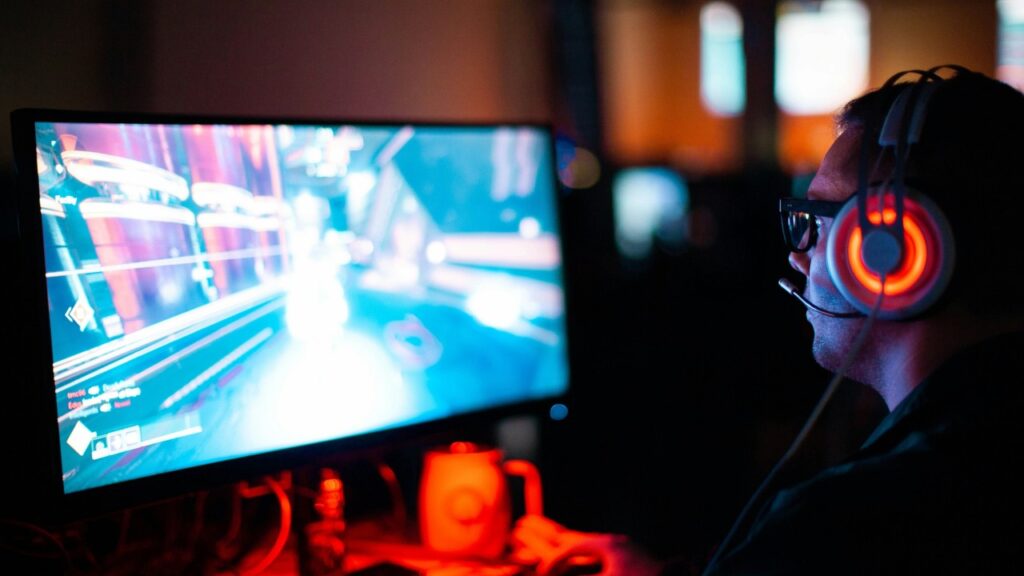
For years, gaming has been painted as the villain of nightlife. It has been blamed for keeping people indoors, replacing nights at the pub with nights in front of a screen and encouraging people to socialise virtually rather than face to face. But what if we’ve been looking at it the wrong way? What if gaming isn’t the reason people stay at home, but the very thing that can encourage them to go out?
It’s a question worth asking because today’s consumers, particularly Millennials and Gen Z, are changing what they expect from a night out. Simply offering food, drink and music is no longer enough for many people. They want experiences that are interactive, memorable and worth sharing. They want a reason to leave the house. Gaming might just be one of the strongest opportunities the hospitality and nightlife sectors have to meet that demand.
Rather than seeing gaming as competition, perhaps we should see it as a social training ground. Millions of people already spend their evenings playing games with friends online. They communicate, collaborate, compete and celebrate together. Those behaviours are fundamentally social. The technology is simply the platform. The challenge for nightlife is how to take those existing habits and transform them into real world experiences.
Gaming already teaches people to connect. Whether it’s working together to complete a mission, enjoying some friendly competition or simply chatting while playing, the experience builds relationships. It creates communities and gives people shared interests. The leap from online interaction to meeting in person is much smaller than many assume. In fact, many gaming communities already organise events, tournaments and meet ups because they recognise that physical experiences strengthen digital relationships.
This is where the opportunity lies. Instead of asking how we persuade people to leave their homes, perhaps we should ask how we make going out feel like a natural extension of what they already enjoy doing. Gaming provides that bridge.
We are already seeing signs that this is happening. Arcade bars have evolved from nostalgic curiosities into vibrant social destinations. Competitive socialising has become one of the fastest growing trends in hospitality, with venues combining digital games, interactive technology and food and drink to create experiences that encourage people to stay longer and interact more. Virtual reality attractions, immersive entertainment venues and esports watch parties all point towards the same conclusion. Gaming isn’t replacing nightlife. It’s reshaping it.
The most successful venues understand that people are looking for participation rather than passive entertainment. They want to do something together, not simply sit together. Gaming creates natural conversation, breaks down social barriers and gives people an immediate shared experience. Whether you’re celebrating a victory or laughing at a spectacular failure, the memories are created collectively.
This matters because nightlife has always been about bringing people together. The setting may change, but the purpose remains the same. The venues that thrive in the coming years will be those that understand social connection is their greatest product. Gaming simply offers another way to deliver it.
There is also an important behavioural shift taking place. For younger generations, gaming isn’t viewed as a separate hobby. It sits comfortably alongside music, sport, streaming and social media as part of everyday culture. Many consumers don’t distinguish between digital and physical experiences in the way previous generations did. They move seamlessly between the two, expecting each to complement the other. That means venues no longer need to compete with home entertainment. Instead, they can build upon it.
Imagine the journey. Friends spend the week gaming together online, chatting and competing from their own homes. As the weekend approaches, that shared experience becomes the catalyst for meeting in person. The venue becomes the next stage of the relationship, not an alternative to it. Gaming acts as the spark, while nightlife provides the atmosphere, the food, the drinks and the unforgettable moments that can only happen face to face.
For operators, this represents a significant opportunity. Hospitality has spent years asking how to attract younger audiences back into venues. The answer may not be to recreate what already exists, but to embrace the interests and behaviours that consumers already have. Gaming communities are highly engaged, naturally social and actively looking for experiences that strengthen their connections beyond the screen.
Ultimately, we may have been asking the wrong question all along. Instead of wondering whether gaming is taking people away from nightlife, perhaps we should be asking how nightlife can harness gaming to create richer, more engaging experiences.
Gaming is not the destination. It is the invitation. It is the catalyst that encourages people to move from in home experiences to out of home ones. It builds confidence, creates communities and provides a shared language that naturally translates into physical social occasions.
If the future of nightlife is built on experiences rather than transactions, then gaming may not simply be part of that future. It could be one of its strongest foundations. Rather than seeing screens as a barrier to social interaction, perhaps it’s time to recognise them as the first step on the journey towards bringing people together in the real world.
The question isn’t whether gaming has changed nightlife. It clearly has. The real question is whether we’re missing the opportunity to use gaming to help reinvent it.