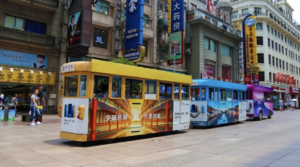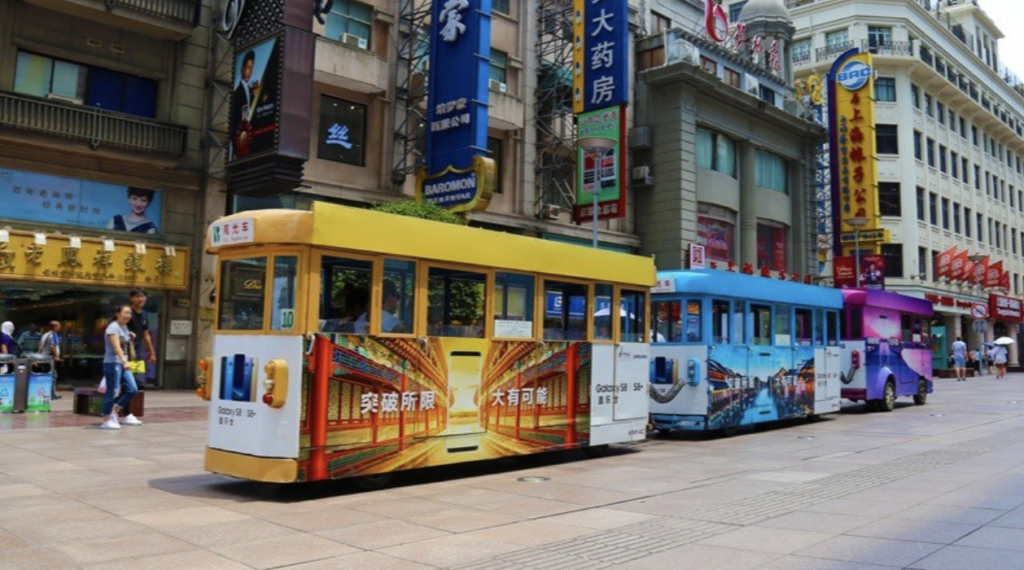
A recent visit to Shanghai, China left me thinking deeply about something that many of us take for granted: the cost of moving people.
In Shanghai, one of the world’s largest and most dynamic cities, transport is remarkably affordable. Whether travelling by taxi, metro or other forms of public transport, the cost of getting from A to B is low enough that it rarely becomes a consideration in decision making. The result is not simply convenience. It creates confidence. It creates movement. Most importantly, it creates economic activity.
What struck me was not just the scale of the transport network itself, but the sheer volume of people constantly moving around the city. Workers travelled freely between districts, consumers moved effortlessly between retail, leisure and hospitality destinations, and businesses benefited from a labour market that was not constrained by travel costs. The city felt fluid. It felt connected. It felt productive.
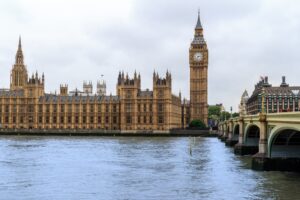
It raises an important question for economies such as the UK, the United States and many parts of Europe, where transport costs are often significantly higher. If movement is a prerequisite for economic activity, what happens when movement becomes expensive?
The relationship between transport and economic growth is often underestimated. We tend to view transport as an operational necessity rather than a strategic economic lever. Yet transport sits at the heart of productivity. People need to get to work. Customers need to reach shops, restaurants and entertainment venues. Businesses need access to talent. Cities need density and interaction to create value.
When transport costs rise, all of these connections become weaker.
For an employee, higher travel costs effectively reduce disposable income. For an employer, they can shrink the available labour pool by making certain jobs financially unattractive to commuters. For consumers, they can turn a night out, shopping trip or cultural event into an expensive proposition before any money is spent at the destination itself.
The impact becomes particularly visible in the night-time economy. Across the UK, hospitality businesses, restaurants, theatres, bars and entertainment venues depend heavily on transport networks. Workers need affordable ways to travel to and from shifts, often outside traditional working hours. Consumers need affordable access to city centres if they are to spend money there.
Yet in many cities, the combined cost of trains, taxis and parking can exceed the cost of the activity itself. When that happens, consumption naturally declines.
The challenge is not simply about affordability. It is about economic psychology. People make decisions based on perceived value. If travelling into a city centre costs £20, £30 or even £40 before spending begins, many people will choose not to make the journey at all. The transaction becomes harder to justify.
This is where transport subsidy becomes an interesting economic discussion.
Traditionally, subsidies are viewed as a cost to government. However, there is a strong argument that transport should be viewed as an investment rather than an expense. Lower transport costs increase mobility. Increased mobility drives higher participation in the economy. Higher participation creates greater consumption, increased business revenues and, ultimately, higher tax receipts.
The economic return can be substantial.
Imagine two cities. In one city, transport costs are low and people travel frequently. In the other, transport costs are high and journeys are undertaken only when absolutely necessary. The first city is likely to see more retail spending, more hospitality activity, greater labour mobility and stronger productivity. The second may save money on transport subsidies but lose significantly more through reduced economic activity.
China appears to understand this relationship well. Affordable transport acts as a lubricant for economic movement. It reduces friction. It encourages interaction. It supports the constant circulation of people that modern urban economies depend upon.
This also connects directly to what urban economists often describe as the “doughnut effect”.
Over recent years, many cities have experienced a hollowing out of their centres. Rising transport costs, changing working patterns and increasing living costs have pushed both consumers and businesses towards suburban and peripheral locations. Rather than travelling into city centres, people increasingly choose options closer to home.
This shift is understandable. If the cost of reaching the city centre is high, local alternatives become more attractive. Cafés, restaurants, gyms, retail outlets and entertainment venues in suburban areas benefit from this behavioural change.
While this creates growth in local communities, it can weaken the economic density that city centres traditionally rely upon. Cities thrive when people gather, exchange ideas, spend money and create opportunities through proximity. When movement declines, so too can the benefits that urban concentration provides.
The question policymakers should therefore be asking is whether transport pricing is inadvertently accelerating the doughnut effect.
If affordable transport encourages people back into city centres, then it may support not only retail and hospitality sectors but also wider productivity gains. Greater movement increases collaboration, expands labour market access and creates stronger economic networks.
Of course, transport subsidies must be funded. There is no such thing as free infrastructure. The debate is not whether there is a cost, but whether the return exceeds the investment.
Perhaps the more important question is what happens when we fail to invest. What is the economic cost of reduced mobility? What is the cost of lower consumption, shrinking city centres, reduced labour flexibility and weaker productivity growth?
These costs are often hidden because they appear across multiple sectors rather than on a transport balance sheet. Yet they may be significantly larger than the subsidy required to keep people moving.
My experience in Shanghai reinforced a simple but powerful observation. Economic growth is fundamentally about movement. People moving to work. People moving to spend. People moving to collaborate. People moving to create value.
When transport is affordable, movement increases. When movement increases, economies become more productive, more connected and more prosperous.
Perhaps it is time we stopped viewing transport as merely a means of getting people from one place to another and started recognising it for what it really is: one of the most important drivers of economic activity that we have.